Three quarters of a century of great cycling have passed through the streets of the Gran Premio Liberazione. Many of the big names who later wrote historic pages in cycling have raced on the Roman circuit, but it is by no means certain that all of them came out winners from the Capitoline race. That’s the beauty of it, its uncertainty, which has always made it one of the most anticipated events. Every year the race has created a story, has showcased personalities, some of whom perhaps shone for just one summer while behind them were those who made cycling their life. Take, for example, the 1988 edition. Perhaps one of the richest in stars before the cycling revolution that from 1996 would bring the pros to the Olympics. In those years, the Liberazione, in Olympic years, was the dress rehearsal for the five-ring challenge. The previous year, the Russian national team had propelled Dimitri Konyshev to victory ahead of West German (the wall had not yet fallen...) Bernd Groene. The following year the challenge was repeated, but this time the Teuton (who would then win silver in Seoul and have a brief professional career at Telekom) prevailed and Konyshev finished third, also preceded by a certain Mario Cipollini… A few years earlier, in 1985, a young boy from Monza, born in Switzerland, upset the odds and disrupted the tactics of the more established teams. His name was Gianni Bugno, he had traveled overnight by train to arrive on time, keeping his bike close so it wouldn’t be stolen. His team had decided to skip the race, but not him. He joined a breakaway that was caught just a few kilometers from the finish, but then managed to win in a sprint among about thirty riders. That was the first of an incredible series of successes, including two world titles. Among the teams that were outsmarted was that of Luigi Orlandi, beaten in the sprint and for whom Claudio Terenzi had also worked, who 35 years later would become the organizer of the GP Liberazione. If we go even further back, to the second half of the seventies, we find that for a few years Italian riders were almost bit players. As if the presence of the great amateur national teams from the communist bloc wasn’t enough, countries with no tradition also came to dominate the scene, such as the British double achieved by William Nickson in 1976 and Bob Downs the following year. Back then, British cycling was a distant relative of what we have known in this century, the era of Wiggins and Froome, Thomas and Pidcock; those two victories surprised everyone because at the time cycling was certainly not the most popular sport in Her Majesty’s country. A few years later, things would change. In 1992, for example, the podium was all Italian, filled with riders who, curiously, would find their place outside of the professional ranks, which lasted only a few seasons. Third was Simone Biasci, a great hope of the time who, after 7 pro wins, became a sports director; second was Mauro Bettin, who moved to MTB where he achieved great success and became a respected manager, while the winner was Maurizio Solagna, who would find his path in granfondos. If you look at the roll of honor of the Roman race, you’ll find that many champions passed through the Liberazione, collecting defeats that later helped them grow. Francesco Moser was third in 1972, the same placing achieved by Pierino Gavazzi two years earlier, Michael Matthews, the Australian from BikeExchange, even collected two runner-up spots, in 2009 and 2010, the year in which he would then win the U23 world championship. The current European champion Sonny Colbrelli was third in 2011, Alberto Bettiol, winner at Flanders, was also third in 2013. Two runner-up spots also for Simone Consonni (2014 and 2015), one of the four Tokyo 2020 Olympic champions in the team pursuit. One might almost think that losing the Liberazione brings good luck… (photo Ansa)
© Gran Premio Liberazione. SSD Terenzi Sport Eventi
© Gran Premio Liberazione. SSD Terenzi Sport Eventi


Liberation, a story of winners and losers thinking about the future
Liberation, a story of winners and losers thinking about the future
2022-02-01 17:59
2022-02-01 17:59
Array() no author 87360
gianni-bugno, dimitri-konyshev, francesco-moser, mario-cipollini, sonny-colbrelli,
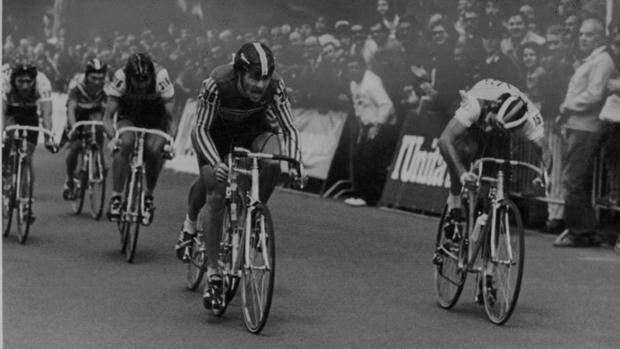
Moser, Konyshev, Bugno, Cipollini, Colbrelli are just some of the very strong young cyclists who took part in the Liberazione and then became great
© Gran Premio Liberazione. SSD Terenzi Sport Eventi