It may not be the Great Wall of China, but the Aurelian Walls have their own significance. Named after the emperor who had them built, they protected Rome during the last two centuries of the Empire's existence, until both natural earthquakes and... barbarian invasions finally managed to bring down the ancient Capital. Of the original 19 kilometers of perimeter, 12.5 have been preserved: in fact, we could call them the largest Roman monument!
The 18 gates that opened in the city walls as entrances and exits to the city have also survived. Some are wider, majestic, and decorated; others are narrower, practically posterns. Of this more "simple" type is, for example, Porta Ardeatina, which lacks defensive towers.
Porta Ardeatina forms the "southeast corner" of the 6-kilometer circuit of the Gran Premio della Liberazione. The riders encounter it at km 2.2, at which point they turn right and head downhill until they reach, at km 3.6, after a sharp left turn, Piazzale Ostiense, the "southwest corner" of the circuit. In this east-west crossing that characterizes the central part of the circuit, participants in the Liberazione keep the Aurelian Walls to their right, passing in front of the sixteenth-century Bastione Sangallo.
If we want to imagine an overlap between eras and millennia, it's as if a hypothetical Liberazione set in imperial Rome would venture outside the city, exiting through Porta Ardeatina, and then re-entering through Piazzale Ostiense. The latter actually corresponded to another gate in the walls, but that's a story we'll tell you later...
© Gran Premio Liberazione. SSD Terenzi Sport Eventi
© Gran Premio Liberazione. SSD Terenzi Sport Eventi


Porta Ardeatina and Aurelian Walls, the GP Liberazione "exits and re-enters" imperial Rome
Porta Ardeatina and Aurelian Walls, the GP Liberazione "exits and re-enters" imperial Rome
2023-03-21 17:07
2023-03-21 17:07
Array() no author 87360
roma, liberazione, porta-ardeatine, mura-aureliane,
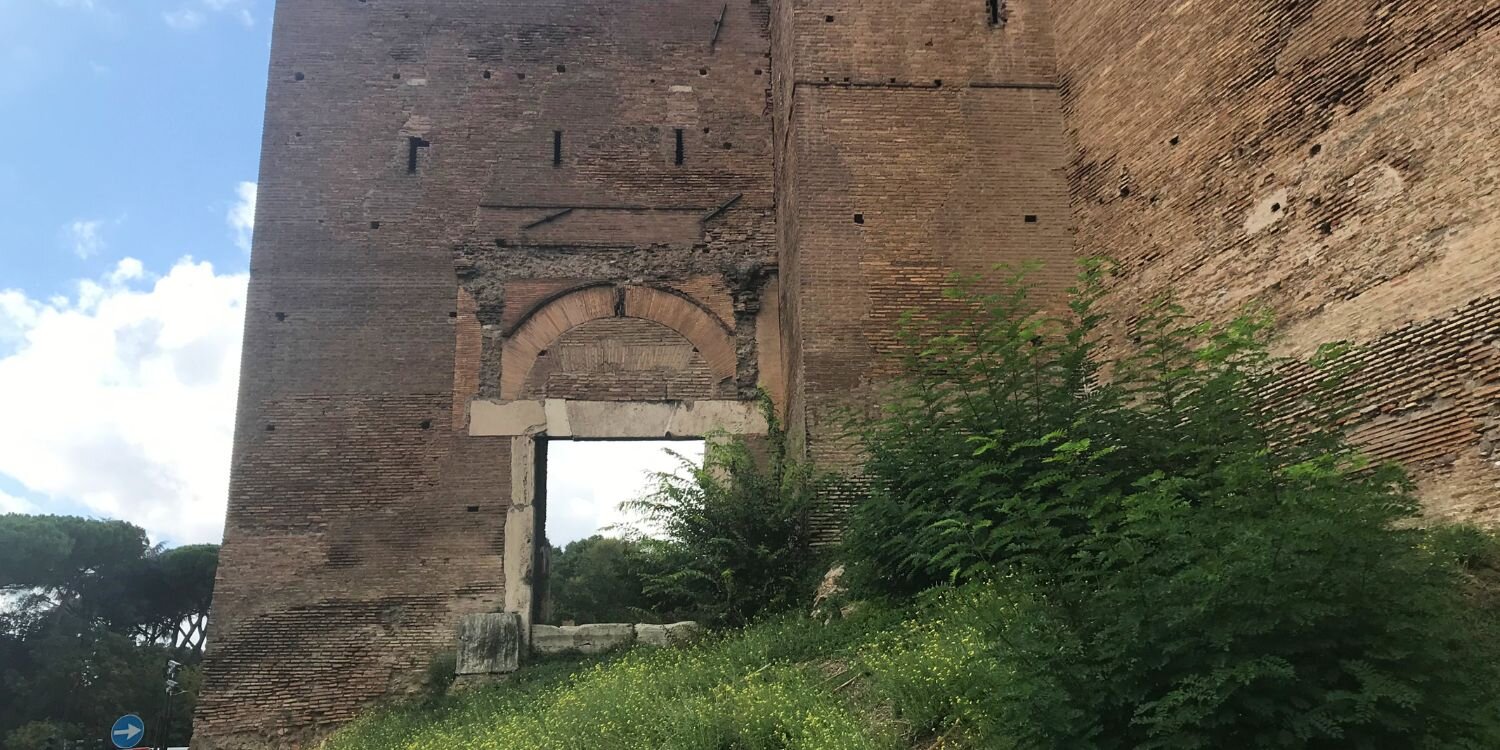
Our journey continues through the "places of Liberation": Porta Ardeatina and the Aurelian Walls protected ancient Rome
© Gran Premio Liberazione. SSD Terenzi Sport Eventi